
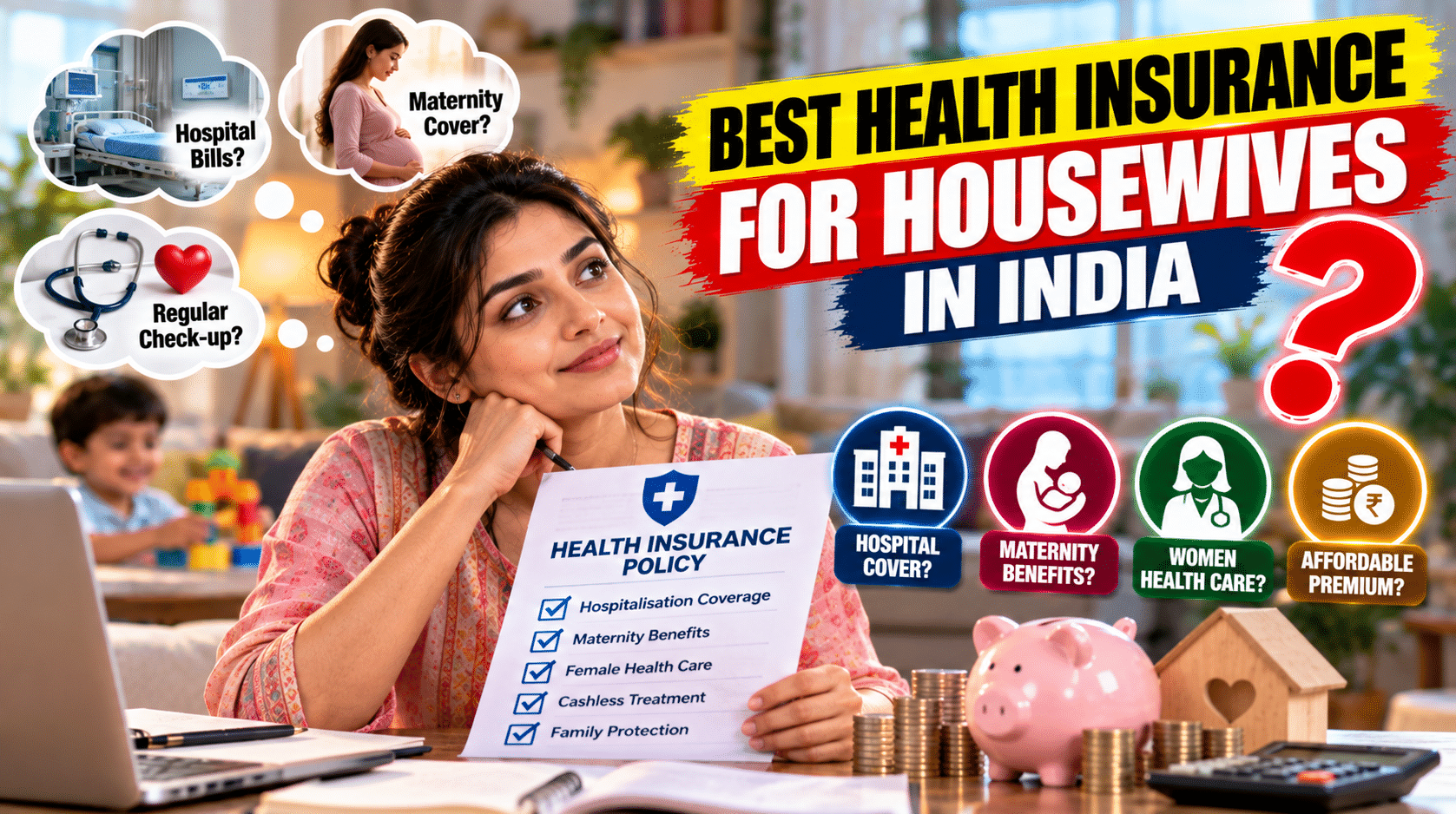
Health Insurance for Housewives in India: A homemaker may not receive a monthly salary, but the work she does every day is essential to her family’s well-being. From managing household responsibilities and caring for children to supporting elderly family members, her contribution has real value. Yet when it comes to financial planning, one important need is often overlooked: health insurance for the homemaker herself.
Many families assume that a housewife can rely entirely on her husband’s employer-provided health insurance or a family floater policy. However, employer coverage may end when a job changes, and a shared family policy may not always provide sufficient protection for every member.
A suitable health insurance policy can help a homemaker access eligible medical treatment without putting unnecessary pressure on household savings. Depending on the plan, benefits may include hospitalisation, pre- and post-hospitalisation expenses, ambulance services, preventive check-ups, and selected women-specific healthcare benefits.
The important question is not simply whether a housewife can buy health insurance. It is which type of policy offers the right protection, what benefits are actually covered, and how a family can choose an affordable plan without missing important conditions.
This guide explains the main options available in India, the benefits to compare, the factors that influence premiums, and the mistakes to avoid before purchasing a policy.
Can a Housewife Buy Health Insurance in India?
Yes. A housewife can obtain health insurance in India even if she does not earn a regular income. Depending on eligibility and insurer requirements, she may be covered under a family floater plan or purchase an individual health insurance policy.
The insurer may ask for information about her age, health history, existing medical conditions and other details needed to assess the application. Income documentation requirements, if any, can vary by product and insurer.
A non-earning homemaker should not assume that health insurance is unavailable simply because she does not receive a salary.
There are three common ways to arrange coverage:
- Individual health insurance: A policy specifically covering the homemaker, subject to the insurer’s eligibility rules.
- Family floater insurance: A shared policy that covers eligible family members under one sum insured.
- Women-focused health insurance: A plan or optional benefit designed to address selected healthcare needs, depending on its terms.
The most appropriate option depends on the family’s existing coverage, budget, medical requirements, and preferred level of protection.
Why Is Health Insurance Important for Housewives?
A homemaker’s medical expenses can affect the entire household’s financial stability. Even if she does not earn an income, her contribution to daily family life is significant. A serious illness or hospitalisation can create medical costs as well as additional expenses for childcare, transport, and household support.
Here are the key reasons to consider health insurance.
1. Protection Against Unexpected Hospital Bills
Hospitalisation can involve room charges, doctor fees, diagnostic tests, medicines, surgery and other expenses. A suitable health insurance policy can pay eligible costs according to its terms, helping reduce the amount the family must fund from savings.
However, the amount payable depends on the sum insured, exclusions, co-payment, deductibles and applicable sub-limits.
2. Access to Women’s Healthcare
Women may need medical attention for gynaecological conditions, hormonal concerns and other health issues at different stages of life.
Some policies offer selected benefits relating to women’s health, but coverage varies considerably. Do not assume that every gynaecological consultation, diagnostic test or treatment is included in a standard hospitalisation policy.
Review the policy wording to understand which treatments qualify and whether outpatient care is covered.
3. Support for Pregnancy and Maternity Expenses
Certain health insurance policies provide maternity benefits, which may cover eligible delivery-related expenses and specified prenatal or postnatal costs.
These benefits frequently have conditions, including waiting periods, eligibility requirements, and monetary limits. Some plans do not include maternity cover in their base benefits at all.
If you are planning a pregnancy, compare the maternity provisions well in advance rather than assuming that a newly purchased policy will cover an upcoming delivery.
4. Financial Protection During Serious Illness
Major medical conditions can require extended treatment and repeated hospital visits. A policy with suitable coverage can help with eligible medical expenses, subject to its conditions.
Some insurers also offer separate critical illness products or optional benefits. These may pay a specified benefit when a covered condition meets the policy definition, which differs from ordinary reimbursement of hospital bills.
Understand the distinction before choosing additional coverage.
5. Less Dependence on Employer-Provided Insurance
If a family depends only on an employer-sponsored health plan, coverage may change when the employee switches jobs, retires, or loses employment.
A personal or family policy can provide another layer of protection, subject to its terms and continuity rules. It can also help families plan for long-term healthcare needs rather than relying exclusively on workplace benefits.
Types of Health Insurance Policies for Housewives
Choosing the right type of insurance is the first step. These are the main options worth comparing.
Individual Health Insurance Plan
An individual policy provides a separate sum insured for the insured person. If the homemaker is the only person covered under that policy, claims by other family members do not use her individual sum insured.
Potential advantages:
- Dedicated coverage for the insured person.
- Easier tracking of her own sum insured and claims.
- A possible option for families that already have separate policies for other members.
What to consider:
- The premium may differ from the cost of adding her to a family floater.
- Eligibility and medical underwriting depend on the insurer.
- Waiting periods, exclusions, and other policy conditions still apply.
An individual plan can be useful when the family wants separate protection for the homemaker rather than relying only on shared cover.
Family Floater Health Insurance
A family floater covers multiple eligible family members under one shared sum insured. Depending on the product, a husband, wife, and children may be included in the same policy.
Potential advantages:
- One policy can cover several family members.
- Policy administration and renewal may be simpler.
- It may be cost-effective compared with purchasing separate policies for everyone.
What to consider:
- The sum insured is shared among covered members.
- One major claim may reduce the remaining cover available to the rest of the family.
- Age, medical history, and other underwriting factors can affect eligibility and pricing.
A family floater can be a practical option for a homemaker, but the family should check whether the shared sum insured is adequate for everyone.
Women-Specific Health Insurance
Some insurers offer women-focused policies or benefits designed around selected healthcare needs. Depending on the product, these may include specified critical illness benefits, maternity-related cover or other defined services.
However, a women-specific label does not automatically mean broader coverage. Some products focus on a narrow set of conditions, while others may have significant waiting periods or benefit limits.
Compare the actual policy wording with a comprehensive health insurance plan before deciding.
Maternity-Inclusive Health Insurance
If pregnancy-related expenses are an important concern, consider a plan that explicitly provides maternity benefits.
Check whether the policy covers eligible delivery expenses, prenatal and postnatal care, newborn expenses, and other specified benefits. Each feature may have its own conditions and limits.
Maternity insurance is not necessarily the best choice for every homemaker. It is most relevant when the family needs this particular benefit and can meet the plan’s waiting-period and eligibility requirements.
Health Insurance Plans for Housewives in India: What Can You Compare?
The Indian market includes health insurance products from several insurers. The following examples can help you begin your research, but they are not a ranking of the best policies.
| Insurer | Example of a plan or product family to research | What to examine |
|---|---|---|
| Aditya Birla Health Insurance | Activ One | Hospitalisation benefits, optional covers and limits |
| Bajaj Allianz General Insurance | Health Guard | Sum insured, exclusions and cost-sharing conditions |
| Care Health Insurance | Care health plans | Hospital network, benefits and waiting periods |
| ICICI Lombard | Elevate | Base coverage, optional benefits and policy restrictions |
| HDFC ERGO | Retail health plans, including Maxima where available | Coverage structure, eligibility and limits |
| Niva Bupa | Heartbeat and other retail health plans | Family eligibility, coverage and renewal conditions |
| Star Health | Star Women Care and other health products | Women-specific benefits, exclusions and waiting periods |
| Tata AIG | MediCare product range | Hospitalisation cover, sub-limits and optional benefits |
| SBI General Insurance | Retail health products | Eligibility, sum insured and policy conditions |
Product names, features and availability can change. The same insurer may offer several plans with different benefits, and not every plan will be appropriate for every applicant.
Before purchasing, obtain the latest policy brochure, Customer Information Sheet and full policy wording. Verify the insurer’s current product details directly rather than relying solely on a comparison table.
What Does Health Insurance for a Housewife Usually Cover?
Coverage depends on the selected policy. A comprehensive health insurance plan may include some of the following benefits.
In-Patient Hospitalisation
This generally relates to eligible treatment requiring hospital admission, subject to the policy’s definitions and conditions.
Pre- and Post-Hospitalisation Expenses
Some policies cover specified medical expenses incurred before and after an eligible hospitalisation for a defined period. The applicable time limits and expense categories vary.
Emergency Ambulance Charges
Certain plans pay eligible ambulance expenses up to a specified limit. Check whether the benefit applies to road ambulance services and what documentation is required.
Preventive Health Check-Ups
Some policies offer health check-ups at specified intervals or up to a defined amount. Check the frequency, eligibility, and whether the benefit is cashless or reimbursement-based.
Maternity and Newborn Benefits
These benefits are available only when included in the plan and are often subject to waiting periods, sub-limits, and other conditions.
Day-Care Procedures
Certain treatments that do not require a full 24-hour hospital stay may be covered if they meet the policy’s day-care definitions.
Critical Illness Benefits
Critical illness cover may be available through a separate policy or optional benefit. It may pay a specified amount after diagnosis of a listed condition that meets the policy definition.
Important: No health insurance plan automatically includes every benefit listed above. Read the individual policy terms to confirm which benefits apply.
What Is Usually Excluded From Health Insurance?
Exclusions are just as important as benefits. A policy may not pay for certain treatments or expenses, or it may cover them only after a waiting period.
Depending on the product, common restrictions may involve:
- Pre-existing diseases during the applicable waiting period.
- Specified illnesses or procedures during an initial waiting period.
- Treatments explicitly excluded by the policy.
- Certain cosmetic procedures that are not medically necessary.
- Expenses exceeding room-rent, treatment, or other applicable limits.
- Non-medical items or charges that are not admissible under the policy.
- Treatments outside the geographical scope of coverage.
- Certain maternity or infertility-related expenses unless specifically covered.
The exact exclusions vary. Do not assume that every policy excludes or covers the same treatment. Check the current wording and ask the insurer to clarify any provision you do not understand.
How Much Health Insurance Cover Should a Housewife Choose?
There is no universal sum insured that works for every family. The appropriate amount depends on the cost of healthcare in your city, the family’s savings, existing insurance, medical history, and ability to pay for expenses that the policy does not cover.
When choosing a sum insured, consider:
Your location: Hospitalisation costs can vary considerably between cities and hospitals.
Existing family coverage: If a family floater is already available, calculate how much cover remains available to each family member after considering potential claims.
Medical needs: Existing conditions or anticipated treatment may influence the type of policy you need, subject to insurer underwriting and policy terms.
Out-of-pocket costs: Co-payments, deductibles, non-payable items and sub-limits can increase the amount you pay yourself.
Long-term affordability: Choose a policy whose premiums you can reasonably maintain at renewal.
Rather than selecting the lowest available coverage automatically, compare a few suitable sum-insured options and examine how much protection each provides.
What Factors Affect the Premium for a Housewife?
Health insurance premiums are determined by the insurer’s pricing and underwriting rules. Common factors include:
Age
Age can influence the likelihood of future claims and therefore the premium. Applying earlier may offer more choices, but the policy must still meet the applicant’s actual needs.
Medical History
Existing illnesses, previous treatment, and other medical details may affect eligibility, pricing, or policy terms. Disclose information accurately during the application process.
Sum Insured
Higher coverage generally costs more, although pricing varies by insurer and product.
Policy Type
An individual policy, family floater, and women-focused product may have different pricing structures.
Optional Benefits
Maternity cover, critical illness benefits, and other add-ons may increase the premium, depending on the plan.
Deductibles and Co-Payments
Some plans allow the customer to share a portion of eligible medical expenses in exchange for different pricing. Understand the financial impact before choosing these options.
Location and Other Underwriting Factors
The insurer may consider the applicant’s location, age profile, and other permitted underwriting factors when calculating the premium.
The best way to estimate the cost is to obtain current quotations using accurate information and compare the benefits on an equivalent basis.
How to Choose the Right Health Insurance Policy?
Follow this practical process before making a purchase.
- Step 1: Assess your current coverage. Check whether the homemaker is already insured under a family floater, employer plan, or another policy.
- Step 2: Identify the main requirement. Decide whether the priority is hospitalisation cover, maternity benefits, women-specific protection, or a separate sum insured.
- Step 3: Compare at least three suitable plans. Review the premium, sum insured, hospital network, room-rent conditions, waiting periods, and exclusions.
- Step 4: Check medical disclosure requirements. Provide complete and accurate information about existing illnesses, previous treatment, and other details requested by the insurer.
- Step 5: Review the policy documents. Read the prospectus, Customer Information Sheet, and policy wording before paying the premium.
- Step 6: Confirm cashless hospital access. Check whether nearby hospitals participate in the insurer’s network. Cashless treatment remains subject to policy terms and claim authorisation.
- Step 7: Understand the claims process. Know how to inform the insurer, submit documents, and escalate a complaint if necessary.
- Step 8: Renew on time. Timely renewal helps maintain continuity, subject to the policy’s rules. Keep policy documents and contact details accessible.
Can a Husband Buy Health Insurance for His Homemaker Wife?
Yes, a husband can generally purchase a suitable health insurance policy that covers his wife, subject to the insurer’s eligibility and application requirements.
The policy may be an individual plan for the wife or a family floater covering eligible family members. The husband may act as the proposer or policyholder where permitted by the product.
However, the application must accurately disclose the insured person’s medical history and other required details. The insurer’s acceptance of the proposal, the premium, and the policy conditions determine the final coverage.
A homemaker does not need to be treated as financially unimportant simply because she does not earn a salary. Her healthcare needs deserve consideration in the family’s financial plan.
Common Mistakes to Avoid
- Choosing a policy only because it is cheap: A low premium may come with lower limits, cost-sharing conditions, or narrower benefits.
- Assuming maternity cover is included: Many policies do not automatically cover maternity expenses. Check the specific benefit and waiting period.
- Ignoring pre-existing disease rules: Disclose all relevant medical information and understand the waiting periods that apply.
- Overlooking hospital networks: Check the availability of suitable hospitals near your home.
- Selecting an inadequate sum insured: Consider the cost of major treatment and the amount your family could comfortably pay from savings.
- Failing to read exclusions: Benefits advertised in a brochure may be subject to conditions in the full policy wording.
- Allowing the policy to lapse: Missing renewal can interrupt coverage and may affect continuity benefits under the policy rules.
Final Verdict: Which Health Insurance Is Best for a Housewife?
The best health insurance for a housewife in India is the policy that provides appropriate medical protection at a sustainable cost, with clear terms and benefits that match her needs.
A family floater may be convenient for a household that wants to cover several members under one policy. An individual plan may suit a family that wants a dedicated sum insured for the homemaker. A women-focused or maternity-inclusive plan may be worth considering when its specific benefits meet a genuine requirement.
Do not choose a policy based on the insurer’s name or the lowest premium alone. Compare the sum insured, hospital network, exclusions, waiting periods, co-payments, maternity provisions, and claim procedures.
Most importantly, review the actual policy documents and disclose medical information honestly. Health insurance is designed to reduce financial uncertainty during medical treatment, and careful selection helps ensure that the protection you purchase is the protection you understand.
Frequently Asked Questions (FAQs)
1. Can a housewife get health insurance without income proof?
Yes, a homemaker may be eligible for health insurance even without a regular salary. The documents required depend on the insurer and product, so confirm the application requirements before applying.
2. Which is the best health insurance policy for a housewife in India?
There is no single best plan for everyone. Compare individual health policies, family floaters, and suitable women-focused plans based on coverage, sum insured, premiums, exclusions, and waiting periods.
3. Can I buy health insurance for my wife if she does not work?
Yes. A husband can generally arrange health insurance for his wife, subject to the insurer’s rules. The application must include accurate information about the insured person’s health and other required details.
4. Is a family floater better than an individual policy for a homemaker?
It depends on the family’s needs. A family floater shares one sum insured among covered members, while an individual policy provides a separate sum insured for the insured person. Compare costs and the protection available after potential claims.
5. Does health insurance for housewives include maternity coverage?
Not necessarily. Maternity benefits are included only in eligible products and may be subject to waiting periods, limits, and other conditions. Check the policy wording before buying.
6. Are women’s health problems covered under a regular health insurance policy?
Some medically necessary treatments may be covered, but the answer depends on the policy, treatment type, exclusions, and waiting periods. Do not assume that every gynaecological or outpatient expense is covered.
7. What is a suitable sum insured for a housewife?
The appropriate amount depends on local medical costs, family coverage, medical needs, and the family’s financial capacity. Compare multiple sum-insured options and examine co-payments and sub-limits before deciding.
8. What affects the premium for a housewife’s health insurance?
Factors can include age, medical history, sum insured, policy type, optional benefits, and other underwriting criteria. Obtain current quotations to understand the actual cost.
9. Can a housewife with a pre-existing disease buy health insurance?
Possibly, depending on the insurer’s underwriting rules and the condition involved. The insurer may apply a waiting period, specific terms, or other restrictions. Always disclose the condition accurately.
10. Are preventive health check-ups included?
Some policies provide preventive check-ups up to a defined limit or at specified intervals. The benefit is not universal, so check the terms of the chosen plan.
11. Can a housewife be covered under her husband’s employer health insurance?
She may be eligible if the employer’s group health insurance scheme includes spouses and the required enrolment conditions are met. Check the employer’s benefits and consider what happens if employment or group coverage changes.
12. What should I check before buying health insurance for a housewife?
Review the sum insured, premium, hospital network, waiting periods, exclusions, pre-existing disease rules, co-payment, deductibles, maternity benefits, and claim procedure. Read the full policy wording before paying.
Disclaimer: This article is for general educational purposes and is not personalised insurance advice. Benefits, eligibility, premiums and exclusions vary by insurer and product. Verify current information with the insurer and review the policy wording before purchasing.