
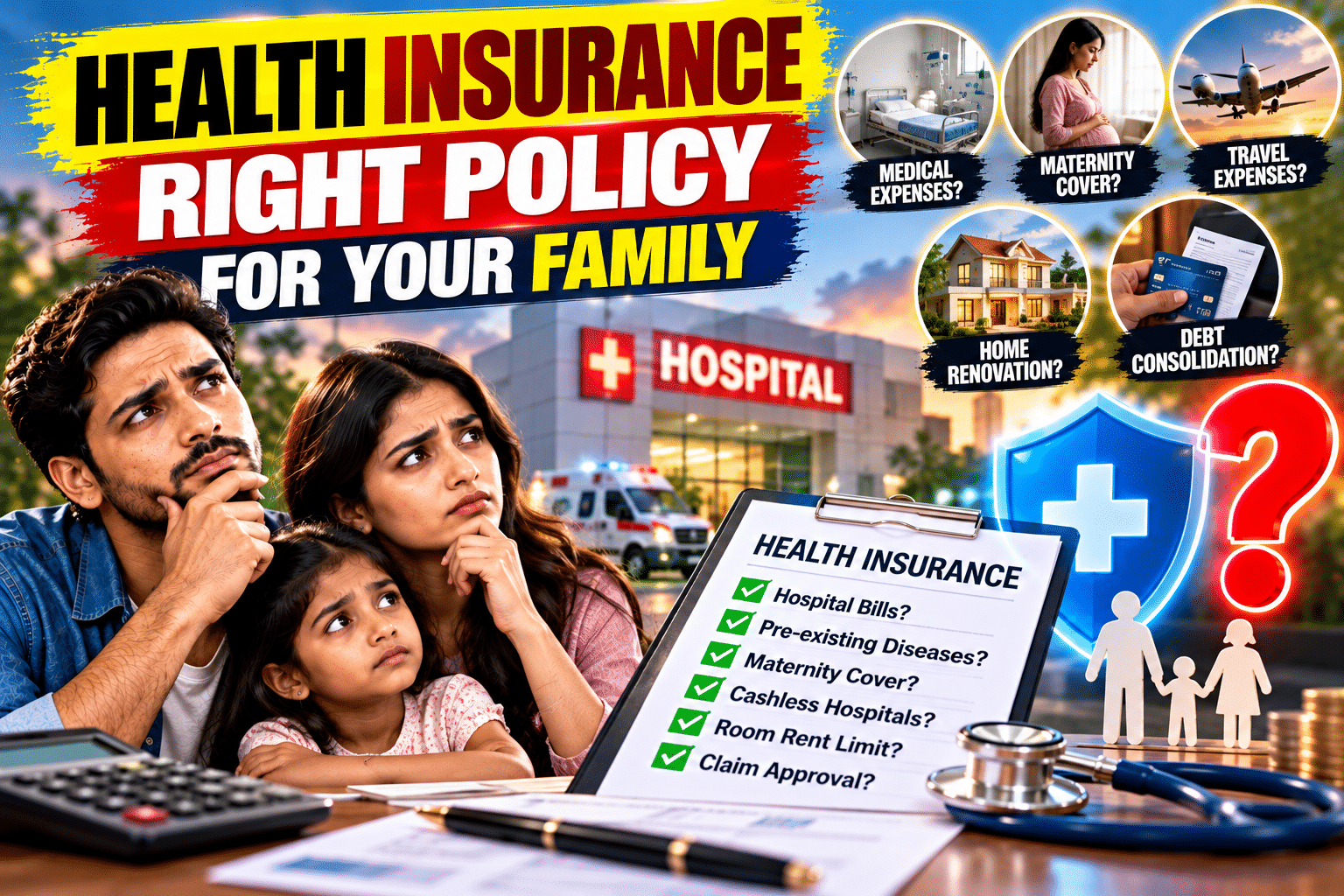
Health Insurance Tips: A medical emergency can put years of savings at risk if you are not financially prepared. Even a planned surgery or a few days in a private hospital can lead to expenses that are difficult to manage from your monthly income alone. That is why choosing the right health insurance policy has become an important part of financial planning for Indian families.
However, buying health insurance is not simply about finding the lowest premium or selecting the policy with the biggest advertised coverage. The real value of a plan depends on what it covers, which hospitals you can access, how its exclusions work, and how much you may still need to pay from your own pocket.
A policy that appears affordable today may not offer enough protection when medical expenses arise. Before making a decision, it is worth understanding the features that can make a meaningful difference during a claim.
Here are seven essential health insurance tips to help you compare policies more carefully and choose coverage that suits your needs.
1. Choose a Health Insurance Cover That Matches Your Needs
The amount of coverage you select, commonly called the sum insured, determines the maximum amount available under the policy for covered medical expenses, subject to its terms, limits, and conditions.
Choosing an appropriate sum insured is one of the most important decisions when buying health insurance. If the coverage is too low, you may have to pay a significant part of a large hospital bill yourself.
For example, imagine that your policy provides ₹5 lakh of coverage and you receive an eligible hospital bill of ₹8 lakh. Depending on the policy’s terms and any applicable limits, you may need to arrange the uncovered amount yourself.
Before deciding how much coverage you need, consider the following factors:
- Your city: Hospital charges and treatment costs can vary significantly between locations.
- Your age: Healthcare needs may change as you grow older.
- Family size: A policy covering several family members needs to account for their combined healthcare requirements.
- Medical history: Existing health conditions and potential treatment needs should influence your decision.
- Future expenses: Consider how your family’s healthcare requirements may change over the next few years.
A young individual with limited responsibilities may have different coverage needs from a family with children or parents who require regular medical attention.
Do not select a policy purely because it offers the smallest premium. Compare the coverage amount with the potential cost of treatment in your area, and review whether a base policy combined with a super top-up plan could offer a suitable balance between affordability and protection.
2. Look Beyond the Claim Settlement Ratio
The claim settlement ratio is often used to assess an insurer’s claim-paying record. Although it can be a useful starting point, it should not be the only factor influencing your decision.
A high ratio does not automatically mean that every claim will be approved or that the claim process will be smooth. Individual claims are assessed according to the policy’s terms, disclosures, exclusions and supporting documents.
When comparing insurers, examine the following:
- Claim settlement information: Review the insurer’s published claim data and understand what the reported figures measure.
- Claim processing: Look for information about how efficiently claims are handled.
- Cashless pre-authorisation: Check the process for obtaining approval for eligible treatment at network hospitals.
- Customer support: Consider how easily you can contact the insurer when you need assistance.
- Policy wording: Understand the circumstances in which claims may be restricted or rejected.
It is also useful to distinguish between the number of claims settled and the amount of money paid out. These figures measure different things and can provide different perspectives on an insurer’s performance.
For a more informed comparison, consult the insurer’s official disclosures and relevant reports published by the Insurance Regulatory and Development Authority of India (IRDAI). Consider the overall evidence rather than relying on a single percentage.
3. Check Waiting Periods and Pre-Existing Disease Rules
One common misunderstanding about health insurance is that every medical condition becomes covered as soon as the policy starts.
In reality, some benefits and conditions may be subject to waiting periods. These are specified periods during which certain treatments or medical conditions may not be covered, depending on the policy.
Pre-existing diseases deserve particular attention. Conditions such as diabetes, hypertension and other illnesses that existed before buying the policy may be covered only after the applicable waiting period and subject to the policy terms.
Before purchasing a plan, check:
- The waiting period for pre-existing diseases.
- Whether specific treatments have separate waiting periods.
- Whether there are restrictions for particular procedures or conditions.
- The policy’s rules for declaring existing medical conditions.
- Whether an optional benefit can reduce a waiting period and what additional cost or conditions apply.
Always disclose your medical history accurately when applying. Withholding information can create complications during claim assessment and may affect your coverage.
If you already have a health condition, compare policies based on their actual terms rather than assuming that a cheaper plan will provide equivalent protection.
It is also worth buying suitable coverage before a medical emergency occurs. Waiting until you need treatment can leave you without immediate protection for expenses that are subject to waiting periods or other restrictions.
4. Review Maternity Benefits and Newborn Coverage
For couples planning to start a family, maternity benefits may be an important feature to consider. However, not every health insurance policy includes maternity coverage, and the available benefits can differ substantially between plans.
Depending on the policy, maternity benefits may help cover eligible expenses associated with pregnancy and childbirth. Some plans may also include specified newborn-related benefits.
Before selecting a policy, check the following details:
- Whether maternity expenses are covered at all.
- The waiting period before maternity benefits become available.
- The maximum amount payable for delivery-related expenses.
- Whether normal delivery and caesarean delivery have different limits.
- Whether prenatal and postnatal expenses are included.
- The conditions and duration of newborn coverage.
Pay attention to the benefit limits. A policy may advertise maternity coverage but still impose a cap that is lower than the hospital expenses you expect.
Timing is important, too. If you are planning a family, review maternity benefits well in advance instead of assuming that coverage will be available immediately after purchasing the policy.
Compare the additional premium, waiting period, and maximum benefit against your expected needs. This will help you decide whether maternity coverage offers meaningful value for your circumstances.
5. Understand How Cashless Hospitalisation Works
During a medical emergency, arranging a large amount of money at short notice can be stressful. A cashless facility can make the process easier when treatment is covered and the required authorisation is granted.
Under a cashless arrangement, eligible hospital expenses are settled directly between the insurer or its claims administrator and the hospital, subject to the policy terms and approved amount.
However, cashless treatment does not necessarily mean that you will never have to pay anything yourself. Non-covered expenses, applicable deductibles, co-payments, room-related limits, and other policy conditions may leave you responsible for part of the bill.
Before buying a policy, check:
- Whether nearby hospitals offer cashless treatment under the plan.
- How the pre-authorisation process works.
- What documents are required during admission.
- How emergency admissions are handled.
- What happens if a cashless request is not approved.
Also, check whether the hospitals you actually prefer are included in the insurer’s current network. A large nationwide hospital network may look impressive, but nearby access can be more useful when you need treatment.
Because hospital networks can change, verify the details directly with the insurer before making a decision or planning treatment.
6. Evaluate the Quality and Accessibility of Network Hospitals
The number of network hospitals is only one part of the picture. Their location, facilities, and suitability for your healthcare needs are equally important.
For example, a family living in a smaller city may value access to a reputable multispeciality hospital nearby more than access to hundreds of hospitals in distant locations.
When evaluating a policy’s hospital network, consider:
- Whether well-equipped hospitals are available near your home or workplace.
- Whether the network includes hospitals offering the specialities you may need.
- How easy it is to reach a suitable hospital during an emergency.
- Whether the hospital’s cashless arrangements are currently active.
- Whether your preferred hospital has any specific admission or authorisation requirements.
Do not assume that every hospital will offer cashless treatment for every policy or that every treatment will be approved automatically.
It is sensible to shortlist a few hospitals you would realistically use and verify their current network status before choosing a plan.
Remember that a health insurance policy is intended to help you access suitable medical care while managing financial risk. The practical usefulness of the hospital network matters just as much as the numbers in a brochure.
7. Consider Whether Critical Illness Cover Is Necessary
Critical illness cover may provide additional financial support if the insured person is diagnosed with a specified serious illness that meets the policy’s conditions.
Depending on the product, eligible illnesses may include certain cancers, heart-related conditions and other serious diseases. Some plans offer critical illness protection as a separate policy, while others provide it as an optional benefit.
A critical illness benefit may pay a lump sum after the claim satisfies the policy’s requirements. This payment can help with eligible medical costs, household expenses, loan repayments or other financial commitments during recovery.
However, critical illness cover is not identical to standard hospitalisation insurance. The illnesses covered, survival period requirements, exclusions and claim conditions can differ between policies.
Before purchasing this benefit, check:
- Which illnesses are specifically covered.
- The definitions used to determine whether a diagnosis qualifies.
- The amount payable for an eligible claim.
- Any waiting period or survival period.
- Exclusions and medical disclosure requirements.
- Whether the benefit is included in the base policy or costs extra.
Consider your income, savings, existing health insurance and family responsibilities before deciding how much additional protection you may need.
Critical illness cover may be useful for some households, but it is not automatically necessary for everyone. Compare it with your existing protection and financial priorities before paying for an additional benefit.
Other Important Health Insurance Terms You Should Not Ignore
Even after checking the seven major factors above, read the policy wording carefully. A few additional features can affect how much financial protection you actually receive.
| Policy feature | Why it matters |
|---|---|
| Room-rent limits | A limit on eligible room charges may affect the amount payable for hospitalisation, depending on the policy terms. |
| Co-payment | You may be required to pay a specified percentage of eligible expenses yourself. |
| Deductible | You may need to pay expenses up to a specified amount before the policy begins paying, as defined by its terms. |
| Exclusions | Certain conditions, treatments, or expenses may not be covered. |
| Restoration benefit | The policy may restore some or all of the sum insured after it is used, subject to the benefit’s conditions. |
| No-claim bonus | Some plans increase coverage or provide another benefit after claim-free periods, according to their rules. |
| Renewal conditions | Check renewal terms, age-related provisions, and the process for continuing coverage. |
| Portability | Eligible policyholders may be able to transfer coverage to another insurer under applicable rules and conditions. |
Do not compare policies based on premium alone. A slightly cheaper plan may have restrictions that make it less suitable for your needs, while a more expensive plan may include benefits you do not require.
The right choice is the one whose coverage, limits, exclusions, and cost fit your circumstances.
How to Choose a Health Insurance Policy: A Practical Checklist
Before you finalise your purchase, use this checklist to compare the shortlisted policies.
-
Select a sum insured based on your age, family size, location and healthcare needs.
-
Compare the insurer’s published claims information and customer support arrangements.
-
Check waiting periods for pre-existing diseases and specified treatments.
-
Review maternity benefits if they are relevant to your plans.
-
Verify the availability of cashless treatment at nearby hospitals.
-
Understand room-rent limits, deductibles, co-payments and exclusions.
-
Compare the total premium with the actual benefits provided.
-
Disclose your medical history accurately.
-
Read the policy wording and customer information document before paying.
-
Save the policy document, insurer contact details, and claim instructions somewhere accessible.
If you are buying family coverage, compare individual policies with family floater options. A family floater generally provides a shared sum insured for covered members, whereas individual policies allocate separate coverage to each insured person. The more appropriate option depends on the family’s ages, health needs, budget, and policy conditions.
Common Health Insurance Mistakes to Avoid
Even a carefully chosen policy may disappoint if important details are overlooked. Avoid these common mistakes when comparing plans.
- Choosing the cheapest premium: Lower premiums can come with lower coverage or restrictions. Compare the complete benefits rather than the price alone.
- Ignoring exclusions: An expense that appears medical may still fall outside the policy’s coverage. Read the exclusions before buying.
- Providing incomplete medical information: Accurate disclosure helps the insurer assess your application and reduces the risk of disputes later.
- Assuming every hospital bill will be paid: Coverage depends on the treatment, policy terms, limits, exclusions, and claim assessment.
- Relying only on employer-provided insurance: Workplace health insurance can be valuable, but its terms and continuation may depend on your employment. Consider whether you need separate personal coverage.
- Failing to review coverage over time: Family size, age, income, and healthcare costs can change. Review your coverage periodically and after major life events.
- Waiting until a medical emergency: Buying insurance when you are already seeking treatment may not provide immediate cover for that condition. Waiting periods and underwriting requirements still apply.
Conclusion
Choosing health insurance is an important financial decision because it can influence how well your savings withstand unexpected medical expenses. The best policy is not necessarily the one with the lowest premium, the highest advertised coverage, or the largest hospital network. It is the one that provides suitable protection under terms you understand and can afford.
Start by estimating your coverage needs, then compare waiting periods, hospital access, claim-related information, exclusions, and out-of-pocket costs. If maternity or critical illness benefits matter to your family, review those features separately rather than assuming they are included.
Most importantly, read the policy wording before purchasing and provide complete, accurate information in your application. A little careful research today can help you make a more informed decision about your family’s financial protection.
Frequently Asked Questions (FAQs)
1. How much health insurance coverage should I choose in India?
The appropriate amount depends on your age, family size, city, medical history, budget, and expected healthcare needs. Compare coverage with local hospital costs and consider whether a base policy plus a super top-up plan may suit your requirements.
2. Is a higher claim settlement ratio always better?
A higher ratio can be a useful indicator, but it should not be the only deciding factor. Review how the insurer reports claims data, its claims process, policy conditions, exclusions, and customer support.
3. Does health insurance cover pre-existing diseases immediately?
Not necessarily. Pre-existing conditions may be subject to waiting periods, underwriting conditions, and policy-specific restrictions. Check the exact terms of the plan and disclose your medical history accurately.
4. What is a cashless health insurance facility?
Cashless treatment allows eligible medical expenses to be settled directly between the insurer or its claims administrator and a network hospital, subject to authorisation and policy terms. You may still need to pay for expenses that are not covered.
5. Does every health insurance policy include maternity benefits?
No. Maternity coverage may be unavailable in some policies or offered with specific waiting periods, limits and conditions. Check the benefit details before purchasing a plan.
6. What is the difference between health insurance and critical illness cover?
Health insurance commonly pays eligible medical expenses according to the policy. Critical illness cover may pay a specified lump sum when the insured person meets the policy’s definition of a covered illness and satisfies the applicable claim conditions.
7. Should I buy health insurance if my employer already provides it?
Employer-provided insurance can be helpful, but you should check its coverage, limits, dependent benefits, and continuation conditions. A separate personal policy may provide additional protection, depending on your circumstances and budget.
8. What should I check before buying a health insurance policy?
Review the sum insured, premium, waiting periods, exclusions, room-rent limits, co-payments, deductibles, network hospitals, claim procedures, and renewal terms. Read the policy wording and customer information document before making your final decision.
9. Can I change my health insurance provider later?
Eligible policyholders can generally explore portability under applicable insurance rules. Conditions, timelines, and the treatment of waiting-period credits matter, so check the current requirements with the insurer before switching.
10. How often should I review my health insurance coverage?
Review it periodically and whenever your circumstances change, such as marriage, childbirth, a change in family responsibilities, or a significant change in healthcare needs. Check whether your current sum insured and policy terms remain suitable.