
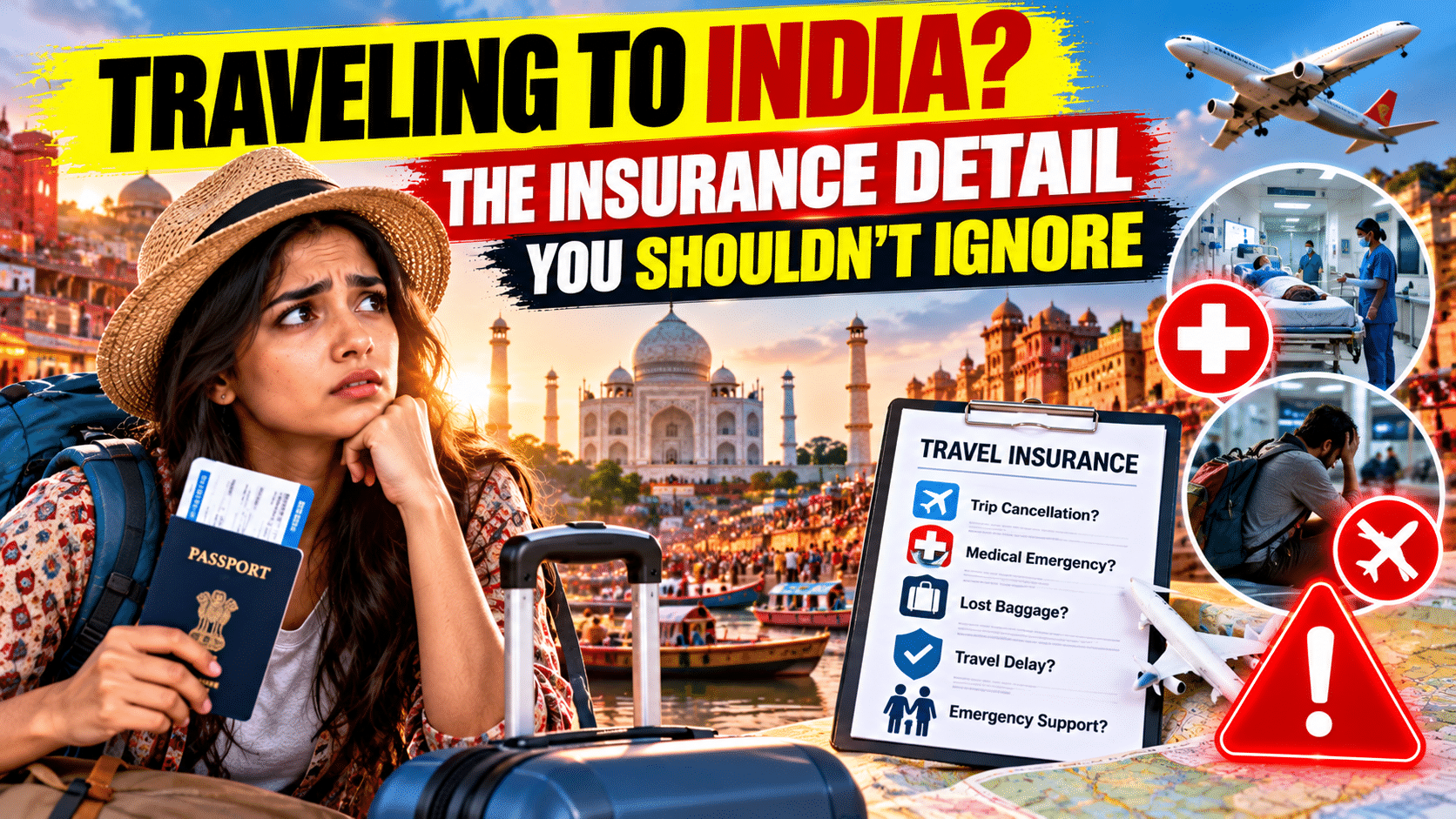
Travel Insurance: India offers an extraordinary mix of experiences, from exploring historic monuments and bustling cities to visiting mountain destinations, spiritual centres and tropical coastlines. But while planning flights, hotels and sightseeing is exciting, there is one important detail international travellers should not overlook: what happens if something goes wrong during the trip?
An unexpected illness, an accident, a cancelled flight or lost luggage can turn a carefully planned holiday into an expensive problem. Travellers may also discover that their regular health insurance does not provide the international protection they assumed it would.
That is where travel insurance can make a difference.
For visitors travelling to India, the right policy may help cover eligible emergency medical expenses, medical evacuation, trip cancellation, travel delays and baggage-related losses. However, not every plan provides the same benefits, and exclusions can significantly affect what you receive.
Before booking your next journey, here is what you should understand about travel insurance for India, how much it may cost, and how to choose coverage that fits your itinerary.
Do You Need Travel Insurance for a Trip to India?
Travel insurance is not generally a universal entry requirement for visitors to India. However, it can be an important financial safeguard, particularly for international travellers whose domestic health insurance may not cover treatment abroad.
For example, a traveller visiting India from the United States may have health insurance that primarily covers care within the US. If an unexpected medical emergency occurs overseas, the traveller could face expenses that their regular plan does not reimburse.
Even when medical treatment is available locally, an emergency may involve more than a hospital bill. Depending on the circumstances, the traveller might need additional transport, specialist medical assistance, an extended hotel stay or an early return home.
A suitable travel insurance policy may help with some of these expenses when they arise from covered events.
Before purchasing a policy, consider:
- Whether your existing health insurance covers treatment in India.
- Whether your trip involves remote destinations or adventure activities.
- How much you have paid in advance for flights, hotels, and tours.
- Whether you could comfortably pay unexpected medical expenses yourself.
- Whether your itinerary includes several flights or international connections.
Travel insurance is not a guarantee against every financial loss. Its value depends on the risks you face, the protection you purchase, and the policy’s terms.
What Does Travel Insurance for India Cover?
Travel insurance can combine several benefits into one policy. Some plans focus mainly on medical emergencies, while comprehensive plans may also include cancellation, interruption, delays, and baggage protection.
The benefits available depend on the insurer and the selected plan.
| Coverage benefit | What it may help pay for |
|---|---|
| Emergency medical expenses | Eligible treatment for an unexpected illness or injury during the trip. |
| Medical evacuation | Emergency transportation to an appropriate medical facility when covered conditions are met. |
| Trip cancellation | Reimbursement of eligible prepaid, non-refundable expenses if you cancel for a covered reason. |
| Trip interruption | Certain unused trip expenses and additional transport costs if a covered event forces you to end the trip early. |
| Travel delay | Eligible additional expenses, such as meals or accommodation, after a qualifying delay. |
| Baggage loss or damage | Covered losses involving luggage and personal belongings, subject to limits and exclusions. |
| Baggage delay | Certain essential purchases when checked baggage is delayed for a qualifying period. |
| Emergency assistance | Coordination and support services when a covered emergency occurs. |
Do not assume that all these benefits are automatically included. Compare the policy documents carefully, including the maximum amount payable under each benefit.
Emergency Medical Coverage: One of the Most Important Benefits
An unexpected illness or injury can disrupt even the best-planned holiday. Medical coverage can help manage eligible expenses when a traveller needs treatment during the trip.
Depending on the policy, this may include hospitalisation, doctor consultations, diagnostic tests, prescribed medication, and other medically necessary treatment for a covered emergency.
The amount of protection available varies widely between plans.
A policy with a low medical limit may be sufficient for some travellers’ needs but could leave others exposed to substantial expenses if they require extensive treatment.
When comparing medical coverage, look at:
- The total emergency medical benefit.
- Whether the coverage is primary or secondary to other insurance.
- The deductible or excess you must pay.
- Whether emergency treatment for pre-existing conditions is covered.
- The rules for hospital admission and insurer notification.
- Exclusions involving particular activities or circumstances.
Important: Travel insurance is not necessarily a substitute for comprehensive domestic health insurance. It is designed primarily for qualifying events associated with travel, and its coverage may end or change according to the policy’s conditions.
Read the medical benefits section before buying, especially if you have an existing health condition or expect to participate in activities that carry additional risks.
Why Medical Evacuation Coverage Deserves Attention?
Medical evacuation is one of the benefits that travellers may not think about until an emergency occurs.
Suppose you are trekking in a remote area and suffer a serious injury. The nearest medical facility may not have the specialist services you need. Transport to a better-equipped hospital could require an ambulance, specialised transport or other arrangements.
Depending on the situation, emergency evacuation may be complicated and expensive.
A suitable travel insurance policy may cover eligible transportation to an appropriate medical facility. Some policies may also provide for medical repatriation, subject to their terms and the necessary arrangements.
Before purchasing evacuation coverage, check:
- The maximum evacuation benefit.
- Whether transport must be authorised by the insurer’s assistance team.
- Which circumstances qualify for evacuation.
- Whether transportation to your home country is included.
- Whether remote-area travel or particular activities are excluded.
Medical evacuation is not the same as ordinary transport home. It usually involves specific medical or emergency conditions, and the insurer’s requirements can determine how the benefit works.
Travellers planning to visit mountainous regions, remote destinations or areas with limited specialist healthcare should give this benefit particular attention.
Trip Cancellation and Interruption: Protecting Your Travel Budget
Flights, hotels, tours and other travel arrangements can involve significant prepaid expenses. If an unexpected event prevents you from travelling, some bookings may be non-refundable.
Trip cancellation coverage may reimburse eligible prepaid costs if you cancel for a reason listed in your policy.
Covered reasons may include certain unexpected medical emergencies, serious illness, injury or other events specified in the contract. The exact conditions vary between plans.
Trip interruption coverage addresses a different situation. It may help reimburse eligible unused trip expenses or additional transportation costs when a covered event forces you to cut your journey short.
For example, if you must return home early because of a qualifying family emergency, interruption coverage may help with certain financial losses.
Before buying this protection, consider the following:
- How much of your trip has been paid for in advance?
- Which bookings are non-refundable?
- What cancellation reasons qualify under the policy?
- Are there specific documentation requirements?
- What limits apply to cancellation and interruption claims?
Do not assume that changing your mind, deciding not to travel, or cancelling because of any unexpected circumstance will automatically qualify for reimbursement.
Some insurers offer an optional benefit known as Cancel For Any Reason (CFAR). It may provide partial reimbursement for eligible prepaid expenses when a traveller cancels for a reason not covered by standard cancellation protection. It usually has specific eligibility rules, purchase deadlines, and other conditions.
If you want this option, review the requirements early in the booking process.
How Much Does Travel Insurance for India Cost?
The cost depends on several factors, including the traveller’s age, trip duration, destination, total prepaid expenses, and selected coverage.
Squaremouth’s published destination guide reported an average premium of approximately $294 for a typical 24-day trip to India, based on its own recent sales data. This is an observed average from that marketplace, not a guaranteed quote or a price that every traveller should expect to pay.
Your actual premium could be lower or higher depending on the policy and personal circumstances.
The main factors affecting the cost include:
1. Length of the trip
Longer trips generally expose travellers to more days of potential medical emergencies and travel disruptions. The duration may therefore influence the premium.
2. Age of the traveller
Age can affect the insurer’s assessment of medical risk and the cost of certain coverage options.
3. Total trip expenses
If you insure prepaid, non-refundable bookings, a higher trip cost can increase the amount of cancellation protection you need.
4. Medical coverage limits
Plans with higher medical benefits may cost more than plans with lower limits, although pricing depends on the full package of benefits and underwriting rules.
5. Evacuation protection
Higher evacuation limits or additional emergency benefits can affect the premium.
6. Optional upgrades
Benefits such as CFAR, coverage for particular adventure activities or certain pre-existing medical conditions may increase the price.
Rather than choosing the cheapest plan automatically, compare the premium with the coverage limits, deductibles, exclusions, and services offered.
A low-cost policy may be appropriate for some travellers, but it should not leave important risks uncovered simply to save a small amount upfront.
What Travel Insurance Limits Should You Look For?
There is no single coverage limit that is right for every trip. The appropriate amount depends on your health needs, itinerary, financial situation, and the kind of protection you want.
When reviewing policies, focus on the actual benefit limits instead of relying only on labels such as “basic” or “comprehensive.”
Consider the following questions:
- Is the medical benefit sufficient for a serious unexpected illness or injury?
- Would the evacuation limit be adequate for the locations you plan to visit?
- Does the cancellation benefit match your prepaid, non-refundable trip costs?
- Are delay and baggage benefits sufficient for your itinerary?
- Are there separate limits for particular treatments, items, or circumstances?
A policy may advertise a large overall benefit but impose lower limits on individual categories. For example, the maximum baggage benefit may be subject to a separate per-item cap.
Read the certificate of insurance and the full policy wording before making a decision.
Pre-Existing Medical Conditions: What Travellers Should Know
Travellers with an existing medical condition should pay close attention to the policy’s medical provisions.
Some travel insurance plans exclude treatment connected with pre-existing conditions. Others may offer limited protection or a waiver if the traveller meets specified eligibility requirements.
These requirements can involve the timing of the policy purchase, the stability of the condition and other medical or contractual criteria.
Before buying, check:
- How the policy defines a pre-existing condition.
- Whether emergency treatment for the condition is covered.
- Whether a waiver is available.
- Whether the waiver has a purchase deadline.
- What medical records or disclosures may be required.
Answer medical questions accurately and do not assume that purchasing a policy automatically provides coverage for every known condition.
If this benefit is important to you, confirm the terms directly with the insurer before paying.
Is Adventure Activity Coverage Included?
India offers many activities that appeal to adventurous travellers, including trekking, rafting, diving and mountain excursions.
However, standard travel insurance may exclude certain high-risk activities or cover them only under specified conditions.
For instance, a policy might cover ordinary sightseeing and routine travel but restrict benefits for mountaineering, technical climbing or other activities involving elevated risk.
If adventure travel is part of your itinerary, verify the activity-specific terms before purchasing coverage.
Check whether the policy requires a licensed operator, protective equipment, professional supervision, or compliance with local rules. Also review any altitude limits or restrictions on particular sports.
Never assume that an activity is covered simply because it is commonly offered to tourists.
If your planned activity falls outside the policy’s standard protection, ask whether a suitable add-on or specialist policy is available.
Common Travel Risks to Prepare for in India
India is a large and diverse destination, so travel conditions can vary considerably by region, season and itinerary. Preparation should reflect where you are going and what you plan to do.
Food- and water-related illness
Changes in food, water and sanitation can cause illness for some travellers. A medical emergency may involve consultation, medication or hospital treatment.
Review the medical benefit and any exclusions that could apply.
Flight and transport disruptions
Delays, missed connections and schedule changes can create extra accommodation and transport expenses. Travel delay benefits may help with certain costs after the policy’s requirements are met.
Theft or lost belongings
Keep passports, payment cards, travel documents and valuables secure. If baggage is lost or stolen, insurance may help with eligible losses, but claim limits and documentation requirements apply.
Remote-area medical access
Travelling to mountainous or remote locations can make access to specialist healthcare more complicated. This is one reason to consider evacuation coverage when choosing a plan.
Unexpected changes to the itinerary
Illness, injury or other covered events may force you to cancel bookings or return home early. Review cancellation and interruption provisions before your departure.
Insurance can help with certain financial consequences, but it does not replace sensible precautions, local travel advice, or appropriate medical preparation.
How to Choose the Right Travel Insurance Policy for India
With several coverage options available, it helps to compare plans using a consistent checklist.
- Step 1: Check your existing insurance. Find out whether your current health or travel benefits already provide any international protection.
- Step 2: Estimate your financial exposure. Add up prepaid, non-refundable travel expenses and consider what a medical emergency could mean for your budget.
- Step 3: Select appropriate medical coverage. Compare medical limits, deductibles, exclusions, and the treatment of pre-existing conditions.
- Step 4: Review evacuation protection. Make sure the benefit matches your destination, planned activities, and potential need for emergency transport.
- Step 5: Compare cancellation benefits. Check which reasons qualify, the maximum reimbursement, and whether optional upgrades are relevant.
- Step 6: Check delay and baggage limits. Review the amounts payable, waiting periods, documentation rules, and per-item restrictions.
- Step 7: Read the exclusions. Understand what the policy does not cover, including relevant activity restrictions and any limitations involving existing medical conditions.
- Step 8: Verify emergency assistance. Check how to contact the insurer during a medical emergency and whether it provides round-the-clock support.
- Step 9: Buy at the appropriate time. Purchasing soon after making your initial trip payment may help preserve eligibility for certain time-sensitive benefits, where offered and subject to their rules.
- Step 10: Save your documents. Keep the policy certificate, emergency contact numbers, claim instructions, and important travel documents accessible during the journey.
What Should You Do If an Emergency Occurs During Your Trip?
If you experience a medical emergency, seek appropriate medical help first. Contact your insurer’s emergency assistance service as soon as reasonably possible and follow the policy’s notification and authorisation requirements.
For non-medical claims, such as lost baggage or a travel delay, preserve the documents needed to support your claim.
Depending on the situation, useful records may include:
- Medical reports and treatment receipts.
- Airline delay or cancellation notifications.
- Police reports for theft, where required.
- Proof of prepaid travel expenses.
- Receipts for additional accommodation or transport.
- Written communication with the airline, hotel or insurer.
Notify the insurer within the required time and ask which documents are needed. Some expenses may require prior approval, so avoid assuming that every cost will be reimbursed after the event.
The final claim decision will depend on the circumstances, evidence, applicable limits and policy wording.
Is Travel Insurance for India Worth the Cost?
For many international travellers, travel insurance can be a practical way to manage financial risks that would otherwise be difficult to absorb.
A relatively modest premium may provide access to benefits for covered medical emergencies, evacuation, trip cancellation and other disruptions. The usefulness of the policy depends on how well those benefits match the traveller’s actual needs.
It is especially worth considering when you have substantial non-refundable bookings, limited international health coverage, a longer itinerary or plans to visit remote locations.
However, insurance should not be purchased blindly. A policy with unsuitable limits or broad exclusions may provide less protection than expected.
Compare several options, read the coverage documents, and select a plan based on your destination, medical needs, and budget.
Conclusion
A trip to India can be memorable for all the right reasons, but unexpected medical expenses and travel disruptions can create financial pressure when you are far from home.
Travel insurance may help protect your trip investment and provide financial support for eligible emergencies, depending on the benefits you choose. Medical coverage, evacuation protection, cancellation benefits, and clear emergency assistance arrangements deserve particular attention.
The best policy is not necessarily the cheapest one. It is the plan that matches your itinerary, offers meaningful protection, and clearly explains what is covered and excluded.
Before departure, check your existing insurance, compare the available options, save your policy documents, and understand how to contact your insurer. A little preparation can help you travel with greater confidence.
Frequently Asked Questions (FAQs)
1. Is travel insurance mandatory for visiting India?
Travel insurance is not generally a universal requirement for entering India. However, it is worth considering because your regular health insurance may not cover overseas treatment. Always check the current entry requirements that apply to your nationality and itinerary.
2. Does US health insurance work in India?
Some US health insurance plans provide little or no coverage outside the United States, while others may offer limited international benefits. Check your plan’s terms before travelling and consider separate travel medical insurance if necessary.
3. What does travel insurance for India cover?
Depending on the plan, it may cover eligible emergency medical expenses, medical evacuation, trip cancellation, trip interruption, travel delays, and baggage losses. Coverage limits and exclusions differ between policies.
4. How much does travel insurance for India cost?
The cost depends on factors such as age, trip duration, prepaid expenses, medical limits, and optional benefits. Squaremouth has reported an average premium of around $294 for a typical 24-day trip to India in its recent sales data, but individual quotes can differ substantially.
5. Does travel insurance cover emergency medical evacuation?
Many plans include emergency medical evacuation benefits, subject to their conditions. Check the limit, qualifying circumstances, authorisation requirements, and whether repatriation is included.
6. Can I get travel insurance if I have a pre-existing medical condition?
Some plans offer limited protection or a waiver for eligible pre-existing conditions. The rules may involve medical stability, purchase timing, and other criteria. Read the policy carefully and disclose relevant information accurately.
7. Does travel insurance cover trip cancellation for any reason?
Standard cancellation coverage generally applies only to reasons specified in the policy. Some insurers offer an optional Cancel For Any Reason benefit that may provide partial reimbursement if eligibility rules and deadlines are met.
8. Are adventure activities covered by travel insurance in India?
Coverage depends on the activity and policy. Certain high-risk sports may be excluded or require an additional benefit. Check the exact terms for trekking, rafting, diving, or other planned activities.
9. Should I buy travel insurance before booking my trip?
You can compare policies while planning, but buying soon after making your initial trip payment may help you qualify for certain time-sensitive benefits. The relevant deadlines and eligibility rules vary by plan.
10. What should I check before buying travel insurance for India?
Review medical and evacuation limits, cancellation protection, deductibles, pre-existing condition rules, activity exclusions, baggage benefits, emergency assistance, and claim procedures. Read the full policy wording before purchasing.